


Tea time avec Sol del Llano
Interview with Manuela Irene Espitia, director of Sol del Llano
 What inspired you to tell the story of this mother and her two children?
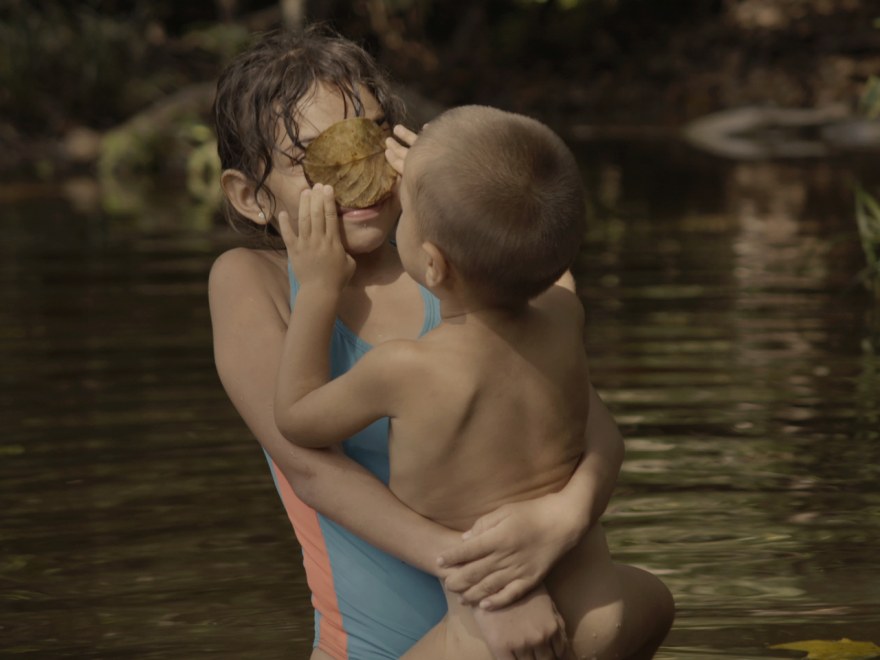
As I became a mother I also struggled with grief for the loss of my cousin. It was a big challenge emotionally and I felt the need to make another film. I wanted to shoot in my grandparents’ house in the Colombian plains where me and my cousins had spent so many summers together. The film is dedicated to her and a lot of our experiences as children are braided into the story.
What did you want to explore in the relationship between the members of this family?
At the beginning what I was most interested in was the silent complicity between the girl and her grandmother. That part of the film came from an anecdote a friend shared with me from his childhood, but in the process of writing the script and visiting the house, the story of the mother in struggle as seen through the girl’s eyes gained weight. I think that finally the central idea in the film is the way children glance into the adults’ crises and how they deal with these unexpected windows that change their perception of reality.

Tell us a bit more about the background of the main character, the little girl Meli.
The background of the character is not relevant, if I extend on that I would just be making it up. I think films are self-contained entities that must stand for themselves and it is up to the spectator to complete whatever is perceived as missing pieces. When a film is open in this way, not explaining thoroughly the characters’ origin or motivations or not delivering justification for every action, it does not focus on moral judgment ; the cinematic experience is enriched by the mind of the spectator, and it is enriched in a unique way due to the diversity of each human experience and their interpretation of life.
What do you hope the audience will get out of it?
My wish is to create emotion through empathy, I think of emotion in art as something that moves us towards reflecting about our own reality. Above all, my attempt was to make a film about the harshness and the importance of love. There is also the theme of nature, which is essential in a very different way; of an understanding unattainable by humans but still a certain parallel between love and nature is suggested.
Would you say that the short film format has given you any particular freedom?
Above all it’s given me the possibility to make films. It’s a great format in which you can own and control every aspect of production, providing a freedom essential for creativity to flow. In Sol del llano, the director of photography and me were also producers, and because we shot at my grandparents’ house and surroundings, most decisions were in our hands completely. It was very challenging and demanding but we were able to move very freely the shooting plan as new obstacles came along, and it also granted me the freedom to change things in the story as we were shooting. We could also make a lot of choices around the convenience of shooting scenes at specific times, as we saw how our non-actors developed during the shooting and having the generous cooperation of our only actress, Javiera Valenzuela – who plays the mother. The exercise was very organic and gave us a lot of freedom. We had no assistant director so at the end of every shooting day we reunited with the line producer and planned the next, taking into consideration how much needed to be covered in terms of pages and scenes in order to finish in schedule.
What do you consider your cinematographic references?
I can say that through the years there have been a series of films that have made a huge impression on me and have stayed with me along my process of learning how to make movies. Among them I can recall the short Gasman by Lynne Ramsay, Les 400 coups by Truffaut, Mouchette by Bresson, Salaam Bombay! by Mira Nair, Where is the Friend’s Home? by Abbas Kiarostami and Jafar Panahi’s The White Balloon. All of them are great, they allow the spectator to live through their child protagonists’ struggles.
Sol del Llano is part of International Competition I14.